Curaçao: The Caribbean’s Best-Kept Secret
Sun-scorched cliffs, a rainbow-painted capital, and waters so blue they don’t look real — Curaçao is the Caribbean island that refuses to be put in a box.
Somewhere between the turquoise sweep of the Caribbean Sea and the rugged, wind-sculpted interior of a desert island, Curaçao has quietly been perfecting its own version of paradise. It sits just 65 kilometres north of Venezuela, safely outside the hurricane belt, which means the sun shines here with almost stubborn reliability — around 300 days a year. And yet, despite all it has to offer, the island remains refreshingly uncrowded, a place where you can still find a deserted cove and have it entirely to yourself.
A Capital Like No Other
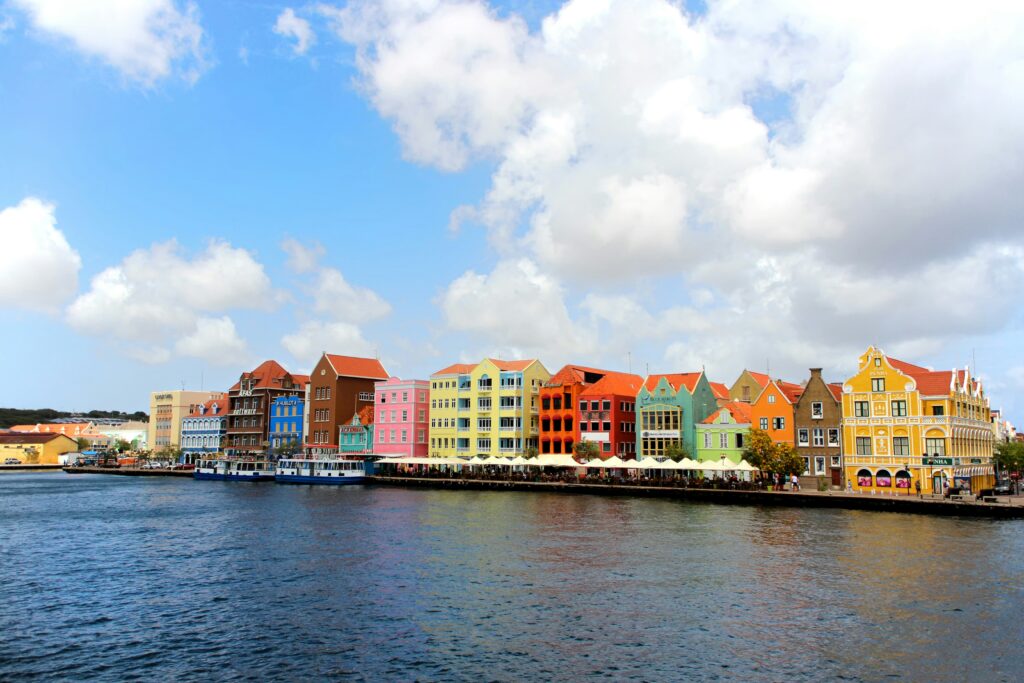
Arrive in Willemstad and you’ll immediately understand why it earned a spot on UNESCO’s World Heritage List. The city’s waterfront is a fever dream of Dutch colonial architecture painted in every shade imaginable — lemon yellow, powder blue, burnt orange, deep coral — their reflections shimmering in the Sint Annabaai channel below. The story goes that a 19th-century governor, plagued by migraines he blamed on the glare of white buildings, ordered the facades to be painted in colour. Whether true or not, the result is one of the most photogenic streetscapes in the entire Caribbean.
Cross the iconic Queen Emma Bridge — a floating pontoon bridge that swings open to let ships pass — and you move between the two historic quarters of Punda and Otrobanda. Punda is the older side, dense with boutiques, market stalls selling fresh fruit and local spices, and open-air restaurants where the smell of stobá (a slow-cooked goat stew) drifts out onto cobblestone lanes. Otrobanda feels younger and more eclectic, its restored warehouses now home to galleries, craft beer bars, and rooftop terraces.
Beneath the Surface
Curaçao’s real showstopper, however, lies underwater. The island sits on a volcanic shelf that drops steeply just off the coast, creating dramatic walls of coral teeming with life. At Mushroom Forest, a surreal dive site on the western shore, giant pillar corals rise from the sea floor like something from another planet. At Blue Room, snorkellers float into a cave illuminated entirely by refracted blue light seeping in from below — no torch required.
The island has more than 65 dive sites, and thanks to minimal boat traffic and strong marine protection, the reefs here are in far better condition than on many of their more famous Caribbean neighbours. Visibility regularly exceeds 30 metres. Even non-divers will find plenty to marvel at: strap on a snorkel at Cas Abao or Playa Kalki, and within minutes you’ll be eye-to-eye with sea turtles, eagle rays, and clouds of iridescent reef fish.
Beyond the Beach
Inland, Curaçao is a different beast entirely. The kunuku — the local word for the countryside — is a stark, beautiful landscape of cacti, aloe, and gnarled divi-divi trees permanently bent westward by the trade winds. The Christoffelpark in the northwest preserves this wild terrain and rewards hikers who climb Mount Christoffel, the island’s highest point, with a panoramic view that stretches to the coast of Venezuela on a clear day.
Then there is the island’s most famous export: Curaçao liqueur. The bitter oranges grown here — a variety that arrived with Spanish settlers in the 16th century — are the only ones in the world that produce the oil used in the original recipe. A visit to the Senior Curaçao Liqueur Distillery, housed in a restored 17th-century plantation house called Landhuis Chobolobo, offers a glimpse into the production process and, naturally, a generous tasting session.
Getting There & When to Go
Direct flights connect Curaçao with Amsterdam, Miami, Toronto, and several other hubs. The island uses the Netherlands Antillean guilder, though US dollars and euros are widely accepted. Since Curaçao lies outside the hurricane belt, there is no bad time to visit — though the period from January to April tends to bring the driest, breeziest weather of all.
Come for the diving, stay for the food, fall in love with the colours. Curaçao has a habit of turning first-time visitors into regulars, the kind who return year after year and wonder, each time, why the rest of the world hasn’t caught on yet.